


Warm Homes Plan: What It Means for Social Housing and the UK’s Solar Future
Warm Homes Plan: What It Means for Social Housing and the UK’s Solar Future
The Government’s new Warm Homes Plan marks the most ambitious upgrade programme for Britain’s housing in a generation. The Plan’s implications for social housing as well as the nation’s wider transition to clean energy are profound. At the report’s core is a simple message: “Clean energy technologies like solar panels, domestic batteries and clean heat are the best long-term solution to these problems.”
For social housing, the Warm Home Plan represents both a challenge and a once-in-a-generation opportunity. With £15 billion committed, the Government aims to upgrade up to five million homes and lift one million families out of fuel poverty by dramatically expanding access to rooftop solar. The WHP states that by 2030, the UK will “triple the number of homes with solar today by deploying panels on the rooftops of up to 3 million more homes.”
Though the Plan’s benefits are also available to homeowners, social housing providers stand to gain the most from a strengthened package of support. The Government has confirmed that it will use its new Warm Homes Fund to help local authorities and housing associations go further, encouraging deeper retrofits and more ambitious clean energy installations.
Alongside this, Crown Commercial Service and Great British Energy are testing new ways to aggregate demand for solar, batteries and heat pumps; a move designed to drive down unit costs for social landlords and the wider public estate. If successful, this could unlock largescale solar deployment across public buildings, from libraries to community centres.
Taken together, these measures could result in twice as many solar installations in the next five years as in the past fifteen, a pace the Warm Homes Plan describes as essential to delivering lower bills and greater energy security.
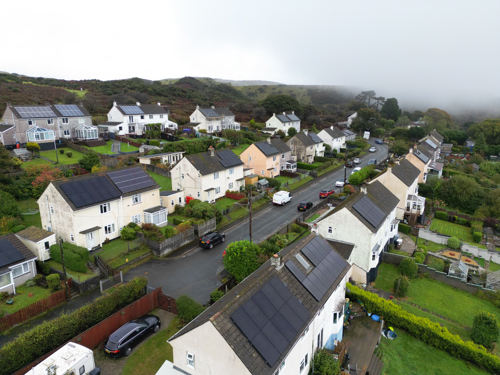
The Plan’s direction of travel aligns directly with Sureserve’s mission to alleviate fuel poverty. “The types of the energy works outlined in the Warm Homes Plan is work that our teams have been delivering every day for decades” says Sureserve Group CEO, Graham Levinsohn.
In driving toward the company’s goal to provide warm, safe homes for all social housing residents, Sureserve has learned that each individual home requires its own unique energy solution. While most homes are well-suited for rooftop solar panels, others do better with ground-mounted solar panels. Our relationships, partners and vast experience (Sureserve has visited over 1.5 million social homes in the past 16 months), has taught us that each housing association and local authority is at a very different stage of their transition from fossil fuel to clean energy. Sureserve’s role is to meet them where they are, whether that means fabric-first upgrades, compliance-driven safety work or integrated systems combining solar PV, battery storage and clean heat.
Importantly, the Warm Homes Plan does not diminish the role of gas. Many homes will continue to rely on well-maintained, gas systems for years to come and Sureserve is committed to delivering excellence across all heating technologies. But the long-term direction is clear: electrification, supported by solar and battery storage, will play an increasingly central role in reducing bills and improving resilience.
As the Government puts it, “Electrification in the home is the key to lower bills and energy security.” With new funding, clearer pathways and a national push for clean energy, the Warm Homes Plan gives social landlords and public bodies the tools they need. And Sureserve stands ready to help turn that ambition into reality.
To start the clean energy transformation conversation with us at Sureserve, click the contact us link below.
Post
-

To Reposition Net Zero as the People’s Hero: Restoring Public Support for Green Energy
23 Mar 2026
-
Energy Capital Collaboration Day
19 Feb 2026
-
Welcoming HI Group – Expert Solutions in Decarbonisation and Sustainability
09 Jan 2026
-

Sureserve Goes International
19 Dec 2025
-

Energy, Ideas and Optimism
02 Dec 2025