


The Future of Social Housing:
Building Better Lives Through the Green Economy
The future of social housing is often discussed through the lens of energy efficiency, renewable technologies and decarbonisation.
These are important priorities, and they will continue to shape investment decisions across the sector for many years to come. Yet a growing conversation is emerging around a broader question.
What is the ultimate purpose of these improvements?
For housing providers, the answer is increasingly clear. The goal is not simply to create lower-carbon homes. It is to create homes that improve people's lives.
As discussions around the green economy continue to evolve, a common theme is beginning to take hold across the housing sector: environmental progress, resident wellbeing and community resilience are all interconnected.
The future of social housing will depend on recognising that connection.

The Conversation Is Shifting
For many years, sustainability strategies focused heavily on improving the environmental performance of buildings.
Success was often measured through metrics such as energy consumption, carbon reduction and efficiency ratings.
While these remain important indicators, there is growing recognition that they only tell part of the story.
Housing providers are increasingly considering the wider outcomes that housing investment can deliver.
A well-performing home is not simply one that consumes less energy.
- It is a home that helps residents live comfortably
- It is a home that supports good health
- It is a home that remains affordable to run
- It is a home that enables people to thrive
As the housing sector continues its transition, the conversation is becoming less about individual interventions and more about the overall experience of residents.

Housing Has A Wider Impact Than We Often Realise
One of the strongest messages emerging from healthy homes discussions across the sector is that housing influences almost every aspect of daily life.
The quality of a home affects physical health, mental wellbeing, educational attainment and economic opportunity.
Poor housing conditions can contribute to respiratory illness, fuel poverty and social isolation.
In contrast, safe, warm and well-maintained homes can help support healthier lifestyles, reduce financial pressures and improve quality of life.
These broader outcomes are becoming increasingly important as housing providers look beyond compliance and asset management requirements towards long-term resident wellbeing.
The challenge is no longer simply about improving homes.
It is about understanding how those improvements can positively influence the people who live within them.
Affordability and Sustainability Must Work Together
A recurring theme in discussions about the future of housing is affordability.
The transition towards more energy-efficient homes is essential, but there is increasing recognition that residents must be able to realise the benefits.
Technology alone is not enough. A highly efficient home still needs to be affordable to operate. A low-carbon heating system only achieves its full potential if residents feel confident using it.
Energy efficiency and affordability should therefore be viewed as complementary objectives rather than separate priorities.
This is particularly important within social housing, where many residents continue to face financial pressures and rising living costs.
Future housing strategies must balance environmental ambitions with practical affordability, ensuring that investment leads to tangible improvements in everyday life.
Healthy Homes Require a Whole-Home Approach
Another key theme shaping the future of social housing is the move towards more integrated thinking.
Housing challenges rarely exist in isolation.
- Ventilation influences air quality
- Insulation affects heating performance
- Energy efficiency impacts affordability
- Damp and mould can influence both health outcomes and resident satisfaction
Addressing these issues individually can deliver improvements but increasing numbers of providers are recognising the value of taking a broader view.
A whole-home approach considers how different elements of a property interact with one another and how they collectively influence resident wellbeing.
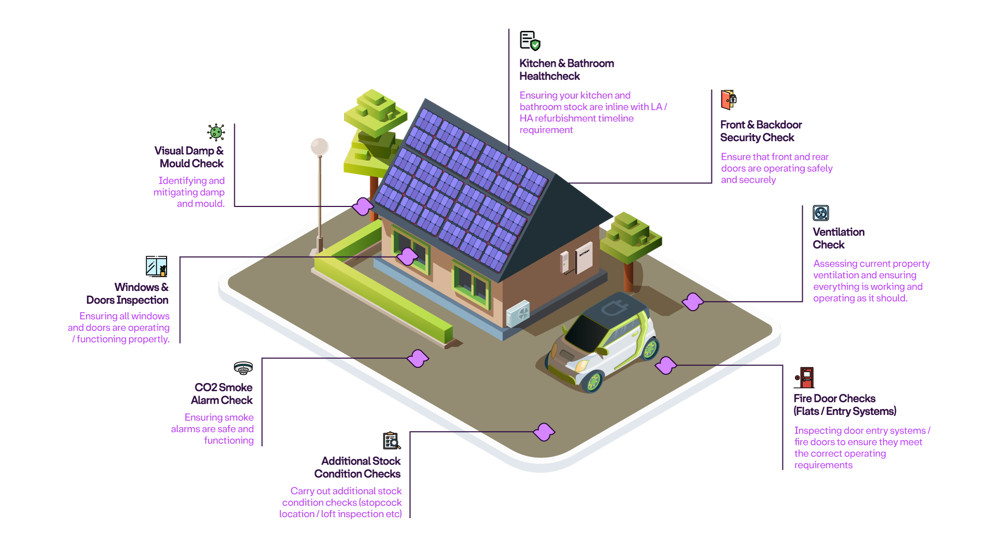
This means thinking beyond individual measures and considering:
- Energy efficiency
- Ventilation
- Damp and mould prevention
- Indoor air quality
- Heating systems
- Building safety
- Resident comfort
Together, these factors help create homes that are healthier, safer and more resilient for the future.
Communities Benefit Alongside Residents
The impact of good housing extends beyond individual households.
Strong housing creates stronger communities.
When residents live in homes that are safe, affordable and comfortable, the benefits can be felt across entire neighbourhoods.
- Health outcomes improve
- Financial pressures are reduced
- Communities become more resilient
- Opportunities for education, employment and social mobility can be strengthened
This is one of the reasons the green economy matters so much to social housing.
Its value cannot be measured solely through environmental outcomes.
It should also be measured through the positive changes it creates within communities.
Housing investment is ultimately an investment in people, places and long-term prosperity.
Looking Ahead
As the green economy continues to shape the future of housing, the sector has an opportunity to redefine what success looks like.
The goal should not simply be to create more energy-efficient buildings.
The goal should be to create homes that support healthier lives.
- Homes that reduce fuel poverty
- Homes that help residents feel safe and comfortable
- Homes that remain resilient in the face of future challenges
- Homes that strengthen communities and improve opportunities
For organisations across the housing sector, that means ensuring environmental ambitions remain closely aligned with resident needs and community outcomes.
Because the future of social housing is not simply about greener homes.
It is about better lives, and the most successful organisations will be those that recognise that the two are inseparable.